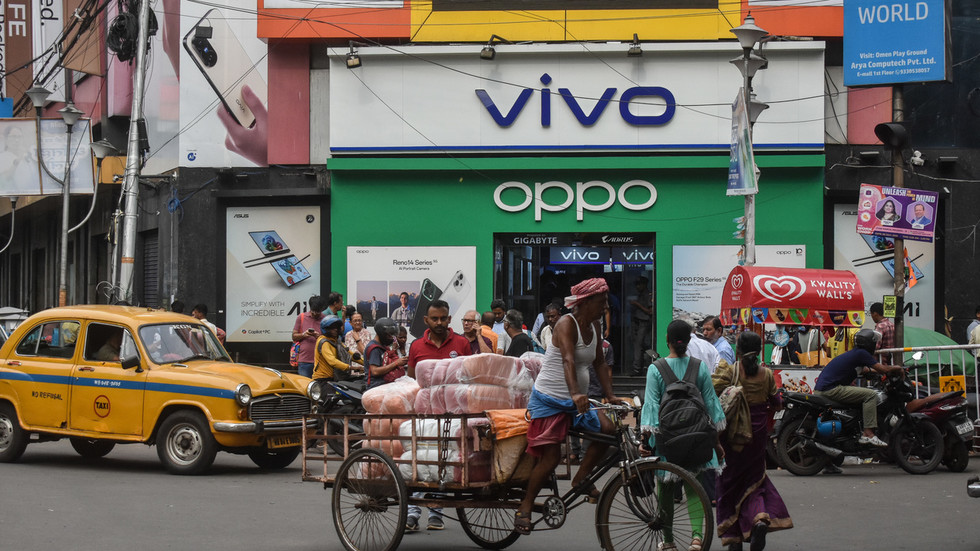
India has cleared a joint venture between Chinese smartphone maker Vivo and Indian original equipment manufacturer Dixon Technologies, signaling New Delhi’s cautious willingness to allow deeper economic integration with its neighbor in critical areas after a deadly border clash in 2020 froze ties.
The approval, which was revealed this week in a stock market filing by Noida-based Dixon, allows the company to set up a smartphone manufacturing plant with Vivo, the top phone brand in India by shipment volume. Dixon will hold a 51% stake in the joint venture.
It also comes on the heels of India’s Finance Ministry allowing four Chinese power equipment makers with factories in India to take part in government tenders for critical power projects.
Power-equipment makers TBEA Energy, Nanjing Electric India, New Northeast Electric India, and Taikai Electric (India) were exempted from rules that require entities from countries sharing a land border with India to register with Indian authorities to bid for certain government contracts.
India expects peak power demand of 300 gigawatts next year as data centers, AI adoption, and EV usage grows.
Investments by such entities in India had long been regulated by a pandemic-era rule which required them to seek mandatory government approval for investments in strategic and critical sectors. Initially notified to prevent opportunistic takeover of Indian businesses, it remained in force after the Galwan clash when the Chinese and Indian militaries skirmished along the Line of Actual Control in eastern Ladakh.
India, however, may now be taking a more nuanced approach that will allow Indian companies to access Chinese technology and expertise as they seek to grow domestic manufacturing amid global supply chain challenges.
“We have a very good collaborative approach with China,” the executive vice chairman of the India-China Trade Center in Delhi, Vijay K. Mishra, told RT TV. He noted that India and China have a complementary economic relationship, with India sourcing technology and components for electronics, pharmaceuticals, and infrastructure sectors.
“India is always cautious while taking any FDI… these are applicable to all countries, not only China,” he said.
India’s approach appears to be one that will allow Chinese firms to participate under conditions that strengthen domestic manufacturing, deepen localization, and maintain Indian control over strategic assets, the Economic Times said.